Teaching is my happy place
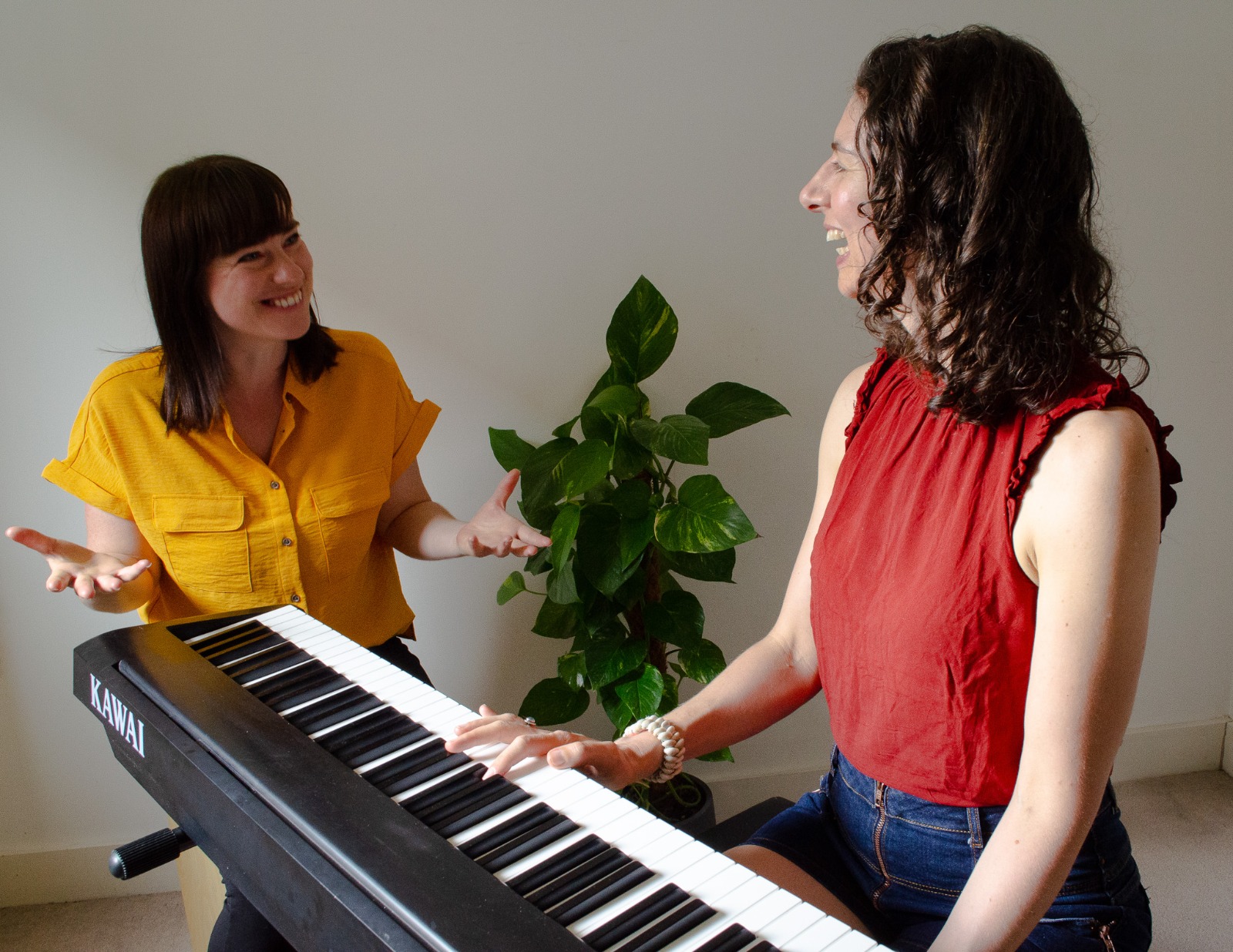
Let me take you back to 2007. I was 22 and had just finished my music degree when my housemate, Sarah, came home and said…
‘I was talking to a colleague. She used to play the piano as a child and wants to pick it up again. Could you teach her?’
I jumped at the chance, and immediately got in touch to arrange our first lesson. I thought ‘Gosh, someone’s going to let me spend an hour with them, teaching them to play the piano? How lucky am I?!”
That was my first clue that I’d discovered what I wanted to do with my life.
A Very Big Question
The hour that I spent with my new students each week always flew by, and I returned home after each lesson, eager to find the most interesting or valuable thing to teach them next lesson.
But I also was grappling with a big question:
‘I don’t want to teach in the same way that I was taught. How can I do it differently?’

‘I don’t want to teach in the same way that I was taught. How can I do it differently?’
100 years ago: the decision that set me on my path today
Let me pause here and express my genuine gratitude for the piano lessons I received as a child. I had kind teachers. I had supportive parents who worked overtime to pay for my lessons.
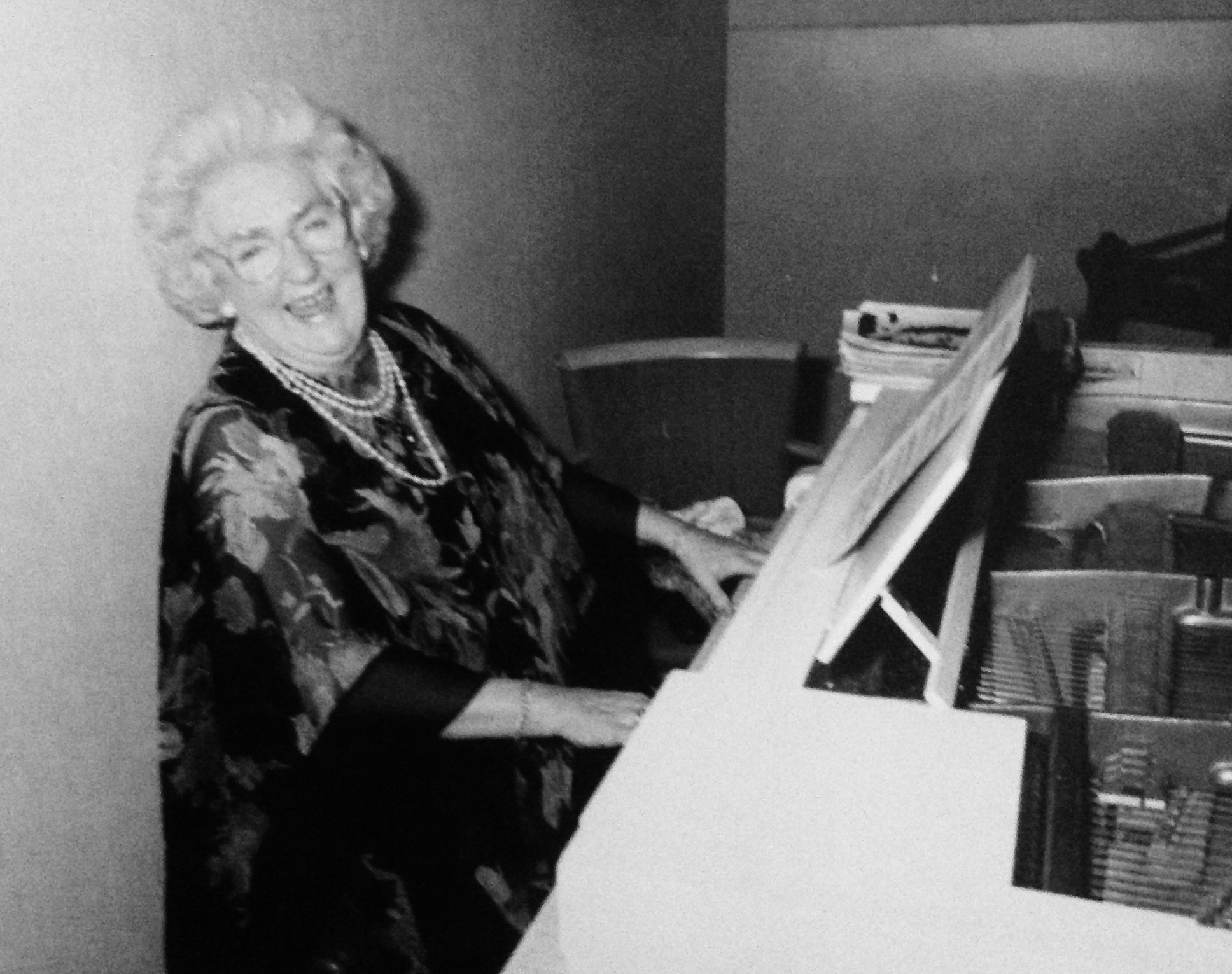
It was my Grandma, who had worked as a musician for almost her whole long life, who arranged my first piano lessons. She herself had somehow known, from a very young age, that she wanted to play the piano. She told me that she used to sit with her hands raised in front of her, pretending to play the piano.
Realising that this wasn’t simply a phase, my Great-Grandparents found my Grandma a piano and she began her own lessons. This changed the course of my Grandma’s life and she remained devoted to the piano throughout her life.
At age 18, she joined ‘Entertainments National Service Association’ (ENSA), an organisation established in 1939 to provide entertainment for British armed forces personnel during World War II. This took her abroad to France, where she would join a group of other musicians to play for the troops, who had gathered for the evening entertainment. She remained playing the piano professionally, in various Torquay hotels, until the age of 88.
It’s amazing to realise how my own life has been shaped by a decision made by my Great-Grandparents, almost 100 years ago, to support their young daughter’s wish to play the piano. I am very grateful for the support I received in learning to play this incredible instrument.
So, what was the problem with my own piano lessons? Why didn’t I want to teach in the same way I was taught?
Beginning to notice the missing pieces
Over the years I began to see that, despite the many hours spent learning this instrument, there were so many things I longed to do but was unable to.
I wanted to be able to play the music I enjoyed, not just the classical pieces set by an exam board. I wanted to be able to improvise and jam with others, not just practice in isolation at home. Most of all, I wanted to accompany myself singing at the piano.
I remember, as a teenager, sitting in bed at night writing lyrics for songs. I’d go to the piano, and try to find chord progressions so that I could find a melody to sing over the top. But chords weren’t something I’d ever been taught to play or understand. My piano lessons, similarly to many other people, were based exclusively around learning pieces of classical music.
That’s why, when my two schoolfriends Kirstin and Jess started to have jazz lessons, and were able to teach me a chord progression…my mind was blown.
Most of all, I wanted to accompany myself singing at the piano.
Becoming empowered with chords
The chord progression they taught me became the basis for my first teenage heartbreak song, age 16. It was called ‘Shattered Dream’, and I can still remember most of it now.
The chord progression itself was a common one. You’ll recognise it from the song ‘Feeling Good’, originally sung by Nina Simone, or ‘Hit The Road Jack’, by Ray Charles. I wasn’t playing anything new, or complicated. But this simple, repeating 4 bar chord progression opened up a whole new world for me. Suddenly, I had the power to write my own songs!
That was it- I knew I had to start teaching myself to play chords. I began going to the library to borrow sheet music for pop songs. With the help of my two friends, I learned to understand the chord symbols and play extremely basic piano patterns so I could accompany myself singing songs I knew.
This was a game-changer for me. Suddenly, I found myself sitting at the piano for hours, playing and singing music that I loved and meant something to me.
Embarrassed by my piano accompaniments
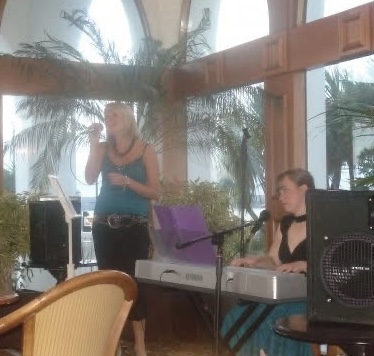
Now that I could play chords, and songs I enjoyed, I was eager to follow in my Grandma’s footsteps and begin playing in the local Torquay hotels. I formed a duo with another singer, Katie, and we began playing for the hotel residents on Friday and Saturday evenings.
This was so exciting for me. I loved finding songs that I thought our audience would enjoy and being able to share them with people. But I still had a problem. Despite now being able to play chords, I still didn’t know how to make particularly interesting piano accompaniments.
I remember, one evening, opening our set with the song ‘Dancing in the Street’, by Martha and the Vandellas. This was a mistake.
It begins with 14 bars of the same chord. With no chord changes to make my piano accompaniment interesting, the music relied on having some funky rhythms, or interesting bass lines, to keep it alive. I didn’t have either of those things. I’d been taught to play Bach, Mozart and Beethoven. There was nothing I could draw on from any of those composers to help me in this moment!
Our audience were polite, they continued to listen attentively. Perhaps they didn’t notice quite how boring my piano playing was. But I did. I was painfully aware that I lacked the piano skills to make this song sound good. I knew I still had more work to do.
Learning to build better piano parts.
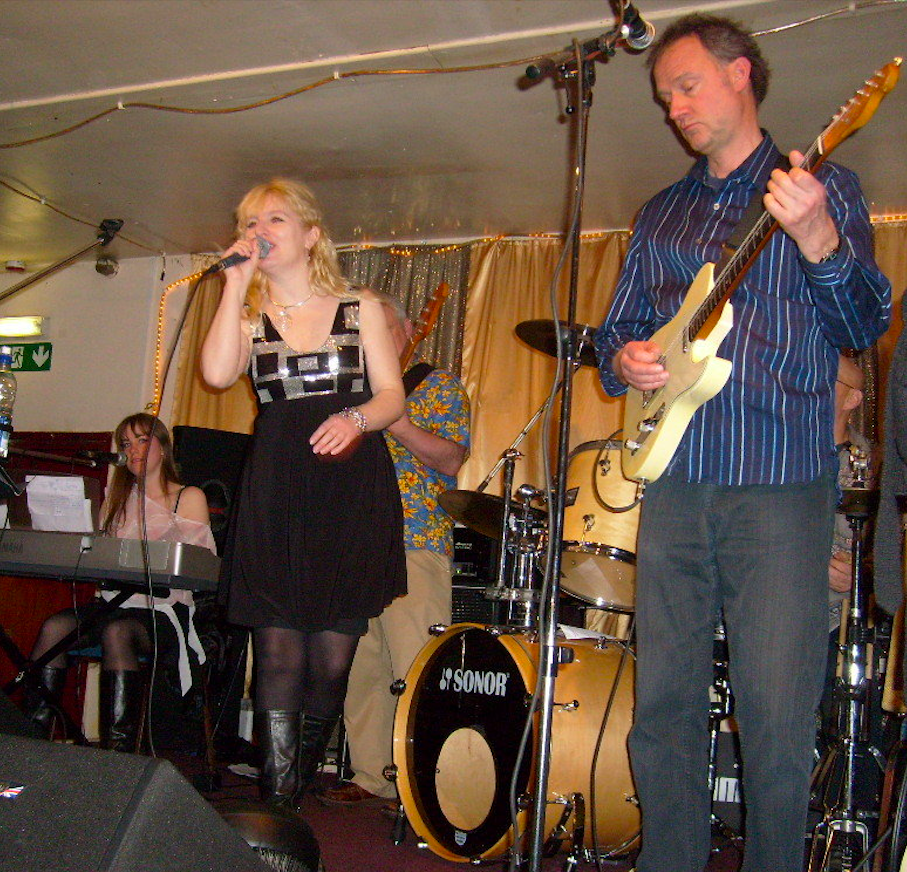
Fast forward a few years, to my mid-20s, when I joined a Motown covers band called ‘Outta Sights’ as a keyboard player and backing singer. Where better to learn how to learn to accompany a singer with interesting piano accompaniments, than in a Motown band? However, on joining the band, I realised I had a lot of catching up to do.
I watched in envy as my band members would spontaneously start to jam, each adding their exciting, interlocking parts to the music. I would be there, bent forward with my ear to the piano, trying out various notes, just trying to figure out what key they were all playing in. As you can imagine, I wasn’t adding a lot to the jam.
Fortunately, they were patient with me, and I was dedicated and committed. I spent hours listening, over and over again, to Motown records, picking out the hooks and the rhythms and learning to replicate them on the piano.
Finally, I was learning how to play the kind of music I really loved. And, I was learning how to create interesting piano parts.
Finding answers to my Very Big Question
Let me tell you about how these moments of failure and learning were influencing my piano teaching.
I began to step away from the graded exam system in which I had been taught. I asked my students what they wanted to learn and, using the skills I’d gained throughout my 20s and 30s, I created my own arrangements for those songs. I asked them what was important to them. Why are they learning the piano? What are their hopes and dreams?
Over time, through word-of-mouth, I noticed that more and more singers who wanted to learn to sing and play the piano began to find me. Word was spreading because there didn’t seem to be many teachers offering this particular type of support.
I started to think, ‘What if the skills I’ve gained over the last twenty years are exactly those I need to be sharing with others?’
Guiding singers and singer-songwriters on their own piano journey
This question led to a decision. Teaching singers and singer-songwriters to accompany themselves at the piano needed to become the core focus of my work. My own journey had led me to understand the unique challenges faced by singers when they’re accompanying themselves at the piano, and this meant that I could help others get there far more quickly than I had.
I thought about why this work felt so important to me. I realised that, in contrast to the way that I’d been taught, the piano can be a tool for our own unique self-expression. It enables us to share our voices and connect with others.
Some of my students, like me, have had classical piano lessons and don’t know enough about chords, or how to break free from sheet music. They need guiding steps and tools that allow them to connect with their own creativity at the piano.
Some of my students have been trying to teach themselves, but have ended up overwhelmed and floundering.
And, of course, there are those who are just getting started at the piano and just aren’t sure where, or how, to begin. I know that I can help them reach their goals so much more quickly, and save them many years of searching.
Ready to start – or continue – your journey as a piano-playing singer?
I’d love to help you.
 Piano Lessons for Singers